Thoughts on longevity 101
This follows from Always wanted to work on things that matter.
I used to think death gave life meaning. Now I think about everything it takes away: people we love, things we could build, worlds we could discover. I recently lost a close family member. I don't want us to keep losing people we love to things we might one day prevent. (I first wrote this on X.)
My biggest fear: time #
My biggest fear was "time": not having enough time to do interesting stuff and explore things, and the feeling of being left behind. It all comes from the fact that we as human beings are taught to accept that we will die one day (funnily, our brain itself tries to shield us from the thought of our own death). We accept it as if it's some mighty physics law. But even our understanding of physical laws gets rewritten as technology advances and we learn more about science. In that process, nothing remains a fixed destiny or a GOD-like power. Everything can be rewritten, reformed, regenerated, relearnt.. re-life.. ah.
What if we all now chose not to die and to keep living? What if humans got this power to keep living as long as they want, to keep exploring, to be healthy for centuries to come, and we as humans killed the biggest enemy of all time, that is, Death?
I believe that by solving death and curing all diseases, I can live longer and keep exploring, keep my curiosity alive, and work on problems that I otherwise wouldn't because of a limited lifetime.
Why do we need a death date? #
(From a conversation with a friend.)
Yeah, I do understand where you're coming from. For a long time I used to think that the thing that makes life more interesting is that we have a timeline, right? We have limited time, and in that time we get this urgency to make the most of our life: we follow our dreams, we work hard, and we spend time with our loved ones, because we think that one day we'll die.
What I think now is: if you don't solve death, then you are indirectly choosing to commit suicide, even though you think that it's a natural way of living. That's how we live, but who even knows about biology? Out of all the sciences, biology is a very unexplored one. Even in physics there are physical laws, but still, as you might know, there are a lot of particles and theories that are unexplored or currently being researched. For example, we haven't really figured out why we don't have gravity in the Standard Model of particle physics (these are open areas of research).
Similarly, I think that even in biology, as a system, we haven't really explored our limits. We choose not to explore this research topic because we are kind of accepting of it, because that's how it has been for all these years. I really feel that if our species doesn't, then other species will. There are many species in the ocean that live longer than humans.
I really believe: why do humans need to restrict themselves to a deadline or a death date? Why don't we have a choice? Even though this is a very philosophical topic to debate, I'm really up for it. I can tell you my views, but they might be different from yours, and that's completely fine. I really think that if we had a choice over our death date, it would make much more sense. We could keep living as long as we want. Our cells would be regenerated, etc. Then it just makes much more sense to live our lives as we want; with that freedom we can achieve goals that we might not in our current lifetimes.
It also gives us a lot of responsibility, because then there will be other problems in society. Obviously society is full of problems, because we humans are a very complicated and subjective species. There might be people who would want to exploit this freedom and start monopolies. But throughout history, I think, humans have been very good at adapting to new situations, so maybe we'll have different rules in society, or maybe entirely different societies. Who knows.
Again, the novels by Iain M. Banks cover a lot of the philosophical and psychological effects of this abundance or singularity. But it can only be achieved when humans have power over their own death and life. I think longevity is a step forward towards that.
Our body is a machine too #
I do understand that I try to relate physics to biology, and they are viewed as very different sciences. That's what we have been told: that they are very different from each other.
In physics, chemistry or computer science, we use mathematics as a general principle. With biology, even though it's about us humans, nature and plants, we think that it's a natural science. It has to be this way. That's it. We can't hack it. There's no mathematical modeling around it. But there are synthetic biology folks trying to hack biology. I really feel that mathematics is the essence of all the sciences, including biology. As human beings, our body is also a system, like a computer, like a machine. It is also a machine. It just runs on a different substrate, blood not binaries, and it can be engineered in a way that lets us understand more about our biology. We can have control over our life and death.
When I say longevity, I mean understanding or viewing biology from that perspective, rather than thinking too philosophically, because I think we'll always have philosophical problems in life. See, today we have AI. AI is again creating a lot of problems in society, viewed philosophically by people as losing control of their lives, jobs and all. But we chose this. This civilization was created by humans themselves. We are the creators of AI, and I think we can be creators of ourselves. We can try to hack our biology in a good way.
Obviously, there will be bad people. There will be people who would want to create bio bombs, or nanobots that can kill a massive number of people, but I think that has always been there in history. Nuclear fission was discovered accidentally, in basic research, not to kill people; the bomb came later.
AI, biotech and what still needs to speed up #
Advances in biotech, AI and robotics will lead us to solutions for the biggest unsolved problem in our lives, and that is Death. I feel sorry for the generation of Einstein or da Vinci, because they didn't have access to smart tools like AI. I bet if they had, they would have conquered death by now.
But there are gaps. There's very little cross-communication between different modalities and specialised models (most of them are "siloed experts"), because very little cross-modality generalisation occurs between modalities or tasks. There are early attempts though, like ESM3, which combines protein sequence, structure and function, and Evo 2, a DNA model that also does well on RNA and protein tasks. Models need to reason from the raw scientific data itself, that is, DNA, protein and RNA, instead of just natural language, because there are not a lot of practical insights written in natural language.
And wet-lab testing needs to speed up. Take an example I read: even if a model unlocked the ability to generate new molecules at a stunning pace, its simulation (in silico) of binding was far from accurate. And if we wanted to improve that, we'd need to feed it back the data from the lab, data that took far longer to get than it took to generate the molecules. And these were tests in a test tube (turn of phrase). Imagine how long it would take if we wanted to improve the model with data that required recruiting humans and monitoring their reactions.
How long does it take to understand what the side effects of chronic administration of a drug in humans are? AI can speed up analyzing the data, or designing the trial, or even getting it approved… but it can't make a 6-month trial complete in 3 months. (AI-designed drugs still hit the same bottleneck in clinical trials.)
Why we started Cogworks #
This is one of the reasons why we started Cogworks: we wanna accelerate the rate of scientific discovery and deliver drugs faster, and obviously this is linked to longevity.
At Cogworks, we build autonomous wet labs to run biological experiments and generate data that can be used to improve AI-Bio models. The more experiments we can run, the more wet-lab data we get, and that is exactly the data AI models need to get better at biology. If the wet lab is the bottleneck, then that's where we wanna work.
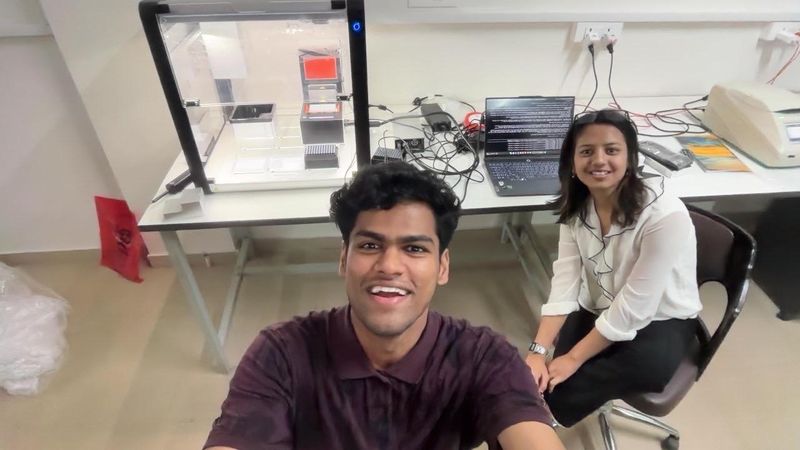
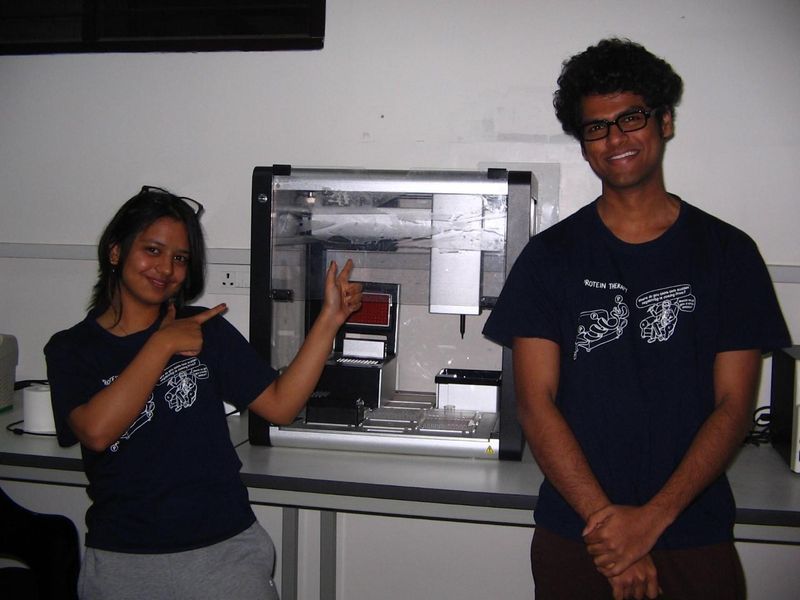
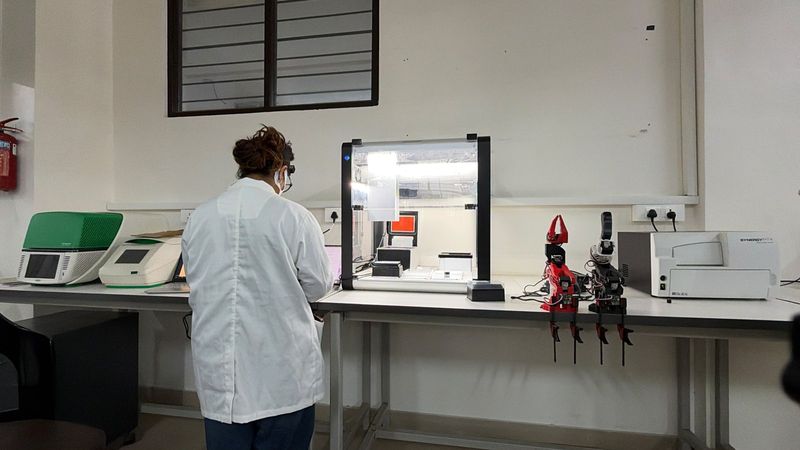
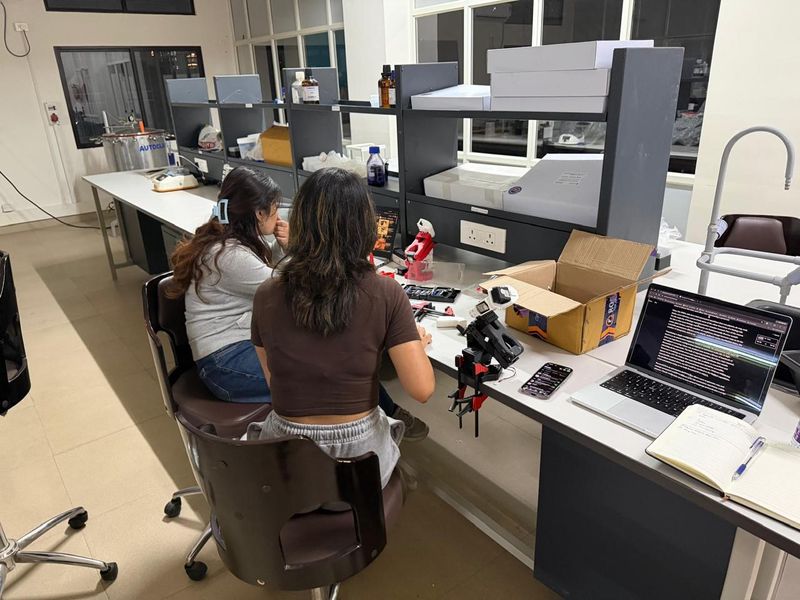
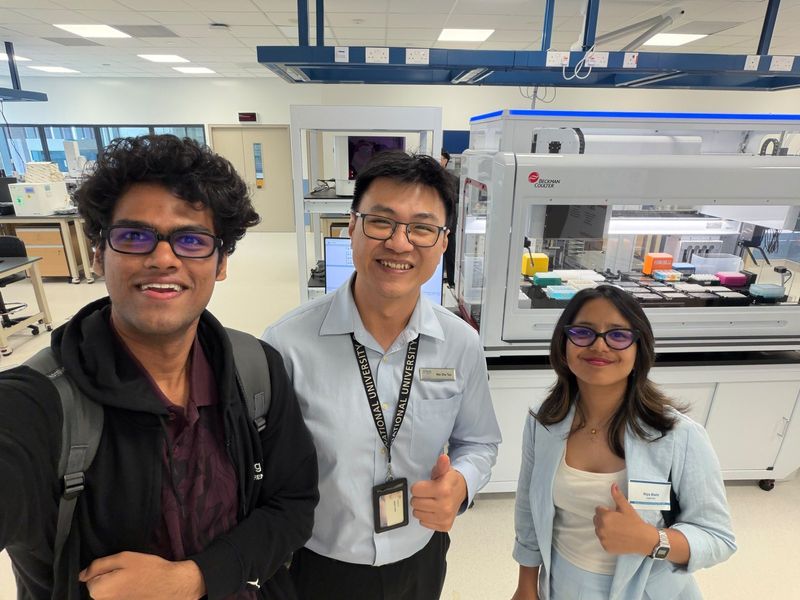
In and around the lab at Cogworks.
The next 10 years #
So for the next 10 years of my life, I want to get into longevity: curing all diseases and gaining independence from time, removing the virtue of time itself. Ya, it might sound like I'm going against physical laws, and whether aging is a biology problem or a physics problem is still debated, but why not.
We also started a community around this: killdeath.life.
References and further reading #
Is aging inevitable?
- Hallmarks of aging: An expanding universe (Cell, 2023): the twelve hallmarks of aging, each one an entry point for anti-aging medicine.
- In Vivo Amelioration of Age-Associated Hallmarks by Partial Reprogramming (Cell, 2016): cyclic expression of the Yamanaka factors reduced signs of aging in mice and extended lifespan in a premature-aging mouse model.
- Aging: a biology problem, or a question of physics? and, for the opposite view, Physics Makes Aging Inevitable, Not Biology.
- Prediction-based neural mechanisms for shielding the self from existential threat (NeuroImage, 2019): how the brain treats death as something that happens to other people.
Species that live longer than us
- Eye lens radiocarbon reveals centuries of longevity in the Greenland shark (Science, 2016): a lifespan of at least 272 years.
- What can turtles and other tetrapods tell us about longevity? (NIH, on a 2022 Science study): many reptiles and amphibians show negligible aging.
- Naked mole-rat mortality rates defy Gompertzian laws by not increasing with age (eLife, 2018): this one is still contested.
- Meet the 7 Longest Living Ocean Animals (Ocean Conservancy).
AI for biology
- Machines of Loving Grace by Dario Amodei: the "compressed 21st century" idea, where AI compresses 50-100 years of biology progress into 5-10 years, with clinical trials as a limit.
- Levers for Biological Progress (Asimov Press): a response to that essay.
- MIMIC: A Generative Multimodal Foundation Model for Biomolecules, Evo 2 and BioLangFusion: on models that work across DNA, RNA and protein.
- AI is not yet driving drug development (Axios): AI-designed drugs still hit the same clinical-trial bottleneck.
Autonomous labs
- The rise of self-driving labs in chemical and materials sciences (Nature Synthesis, 2022).
- Autonomous 'self-driving' laboratories: a review of technology and policy implications (Royal Society Open Science, 2025).
Latest developments (2025-2026)
- FDA go-ahead to test cellular rejuvenation therapy in humans (Nature Biotechnology, 2026): Life Biosciences' ER-100 is the first partial epigenetic reprogramming therapy to reach a human trial. The first participant was dosed in June 2026, and initial results were reported in October 2026.
- Accelerating life sciences research with Retro Biosciences (OpenAI, 2025): an AI model designed better variants of the Yamanaka factors. The results are company-reported.
- Evidence for improved DNA repair in the long-lived bowhead whale (Nature, 2025): a protein called CIRBP helps the whale repair its DNA, and may explain its 200-year lifespan.
- XPRIZE Healthspan finalists (August 2026): 20 teams advance in a $101 million competition to extend healthy aging, with trials running until 2029.
- Loyal's lifespan extension drug for senior dogs (January 2026): the FDA accepted its safety package. It is not approved yet.
- Rentosertib Phase IIa results (Nature Medicine, 2025): a drug discovered and designed with AI met its primary endpoint in lung fibrosis patients. A follow-up analysis looked at its effect on biological age clocks (Nature Biotechnology, 2026).
- AI materials discovery now needs to move into the real world (MIT Technology Review, 2025) and Lila Sciences: on the new wave of AI-driven autonomous labs.
Other
- The Standard Model (CERN).
- The Discovery of Fission, 1938-1939 (US Department of Energy).
- The Culture series by Iain M. Banks.